
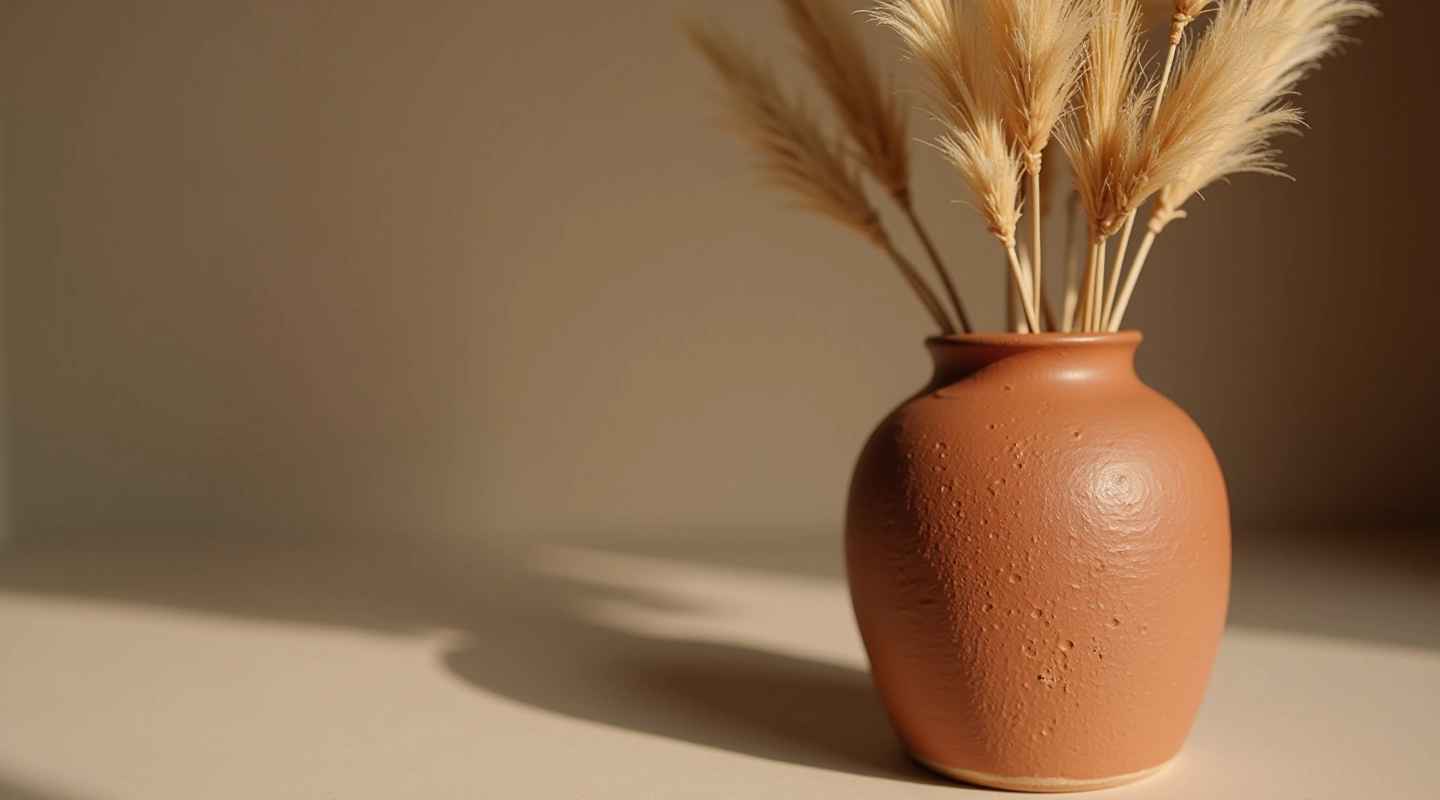
Ceramic Vase Crafting: From Clay to Finished Piece
Explore the traditional hand-throwing techniques used by kormcroft ceramicists. Learn what makes handmade vases unique.
Three simple arrangement styles that transform any room. We'll walk you through creating balanced displays with ceramic vases and dried pampas reeds.
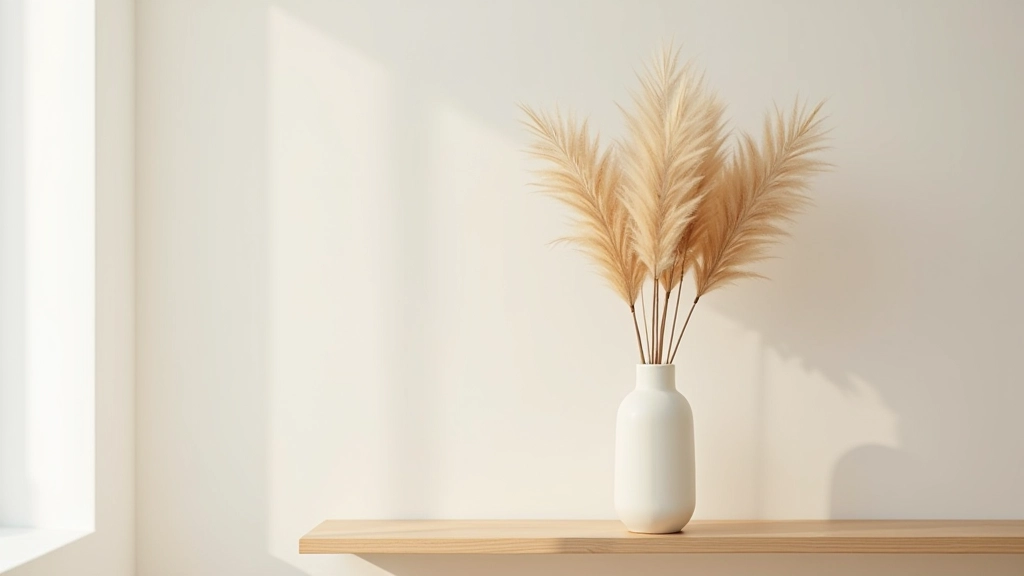

There's no single "right way" to arrange a vase with reeds. But there are three approaches that work consistently well in homes. Each creates a different feeling — minimal and modern, layered and textured, or tall and dramatic. We've tested these with real spaces, and they adapt to almost any room size.
The key isn't following rules. It's understanding balance. When you pair a ceramic vase with dried reeds, you're working with two very different materials. One's solid and grounded. The other's light and airy. Getting them to work together visually is simpler than you'd think.
Start simple. Pick a ceramic vase — doesn't have to be large. Place 5-7 dried reed stems inside, spacing them evenly. That's it. This style works because the vase does the visual work. The reeds are there, but they're restrained. You're letting the ceramic's shape and glaze take center stage.
We like this approach in bedrooms and home offices. It's calm. Not demanding. And it leaves room for other decorative elements on your shelf or table. The beauty is in the simplicity — no fussing, no overthinking. Just a vase, some stems, and clean lines.
Quick tip: Choose reeds that are 8-12 inches taller than your vase. This creates visual lift without looking sparse.
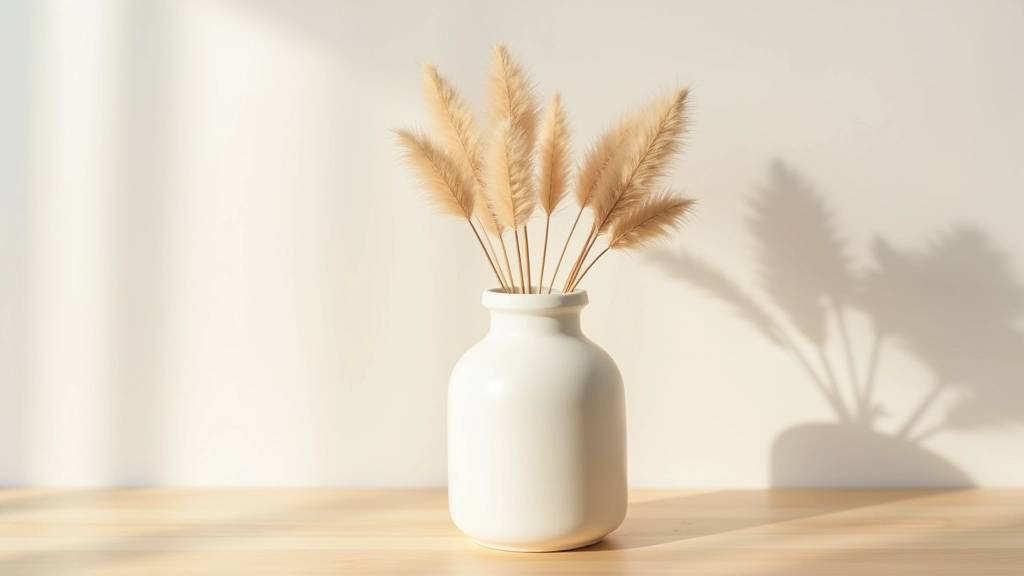
Now we're adding depth. This style uses multiple stem types — pampas reeds, dried grasses, maybe some natural branches. You're creating layers within the arrangement. The vase is still visible, but the reeds create movement and texture around it.
This works beautifully in living rooms and entryways. It's got presence without being overwhelming. You'll want a slightly larger vase here — something that can handle 12-15 stems without looking crowded. Vary your stem heights. Some reach high, others sit lower. This variation is what makes the style feel alive.
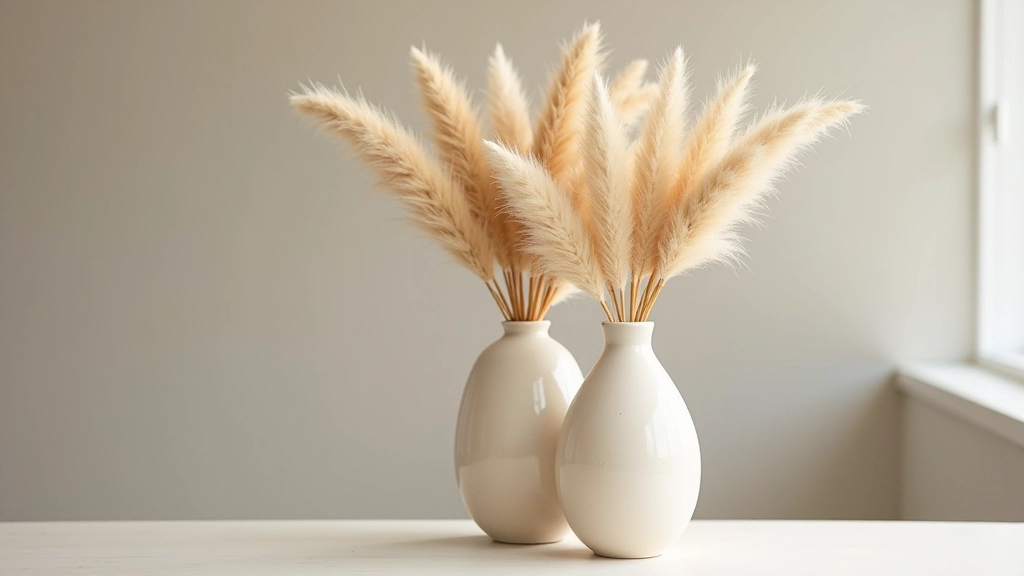
The technique here is straightforward. Fill your vase about halfway with the stems. Don't arrange them in rows — let them cross and overlap naturally. Step back every few stems and look at the silhouette. You want it to feel organic, not geometric. This usually takes 10-15 minutes once you've gathered your materials.
Go bold. Use a tall ceramic vase and fill it densely with reeds. This style is about making an arrangement that's impossible to miss. It works in corners, next to doorways, anywhere you want visual impact. The arrangement becomes furniture — a sculptural element in your space.
Here's what makes it work: you need volume. We're talking 20-30+ stems depending on their thickness. The reeds create a solid shape that echoes or complements your vase's form. If your vase is curved, let the reeds fan out. If it's geometric, keep them more structured. The vase and the reeds should feel like they're part of the same composition.
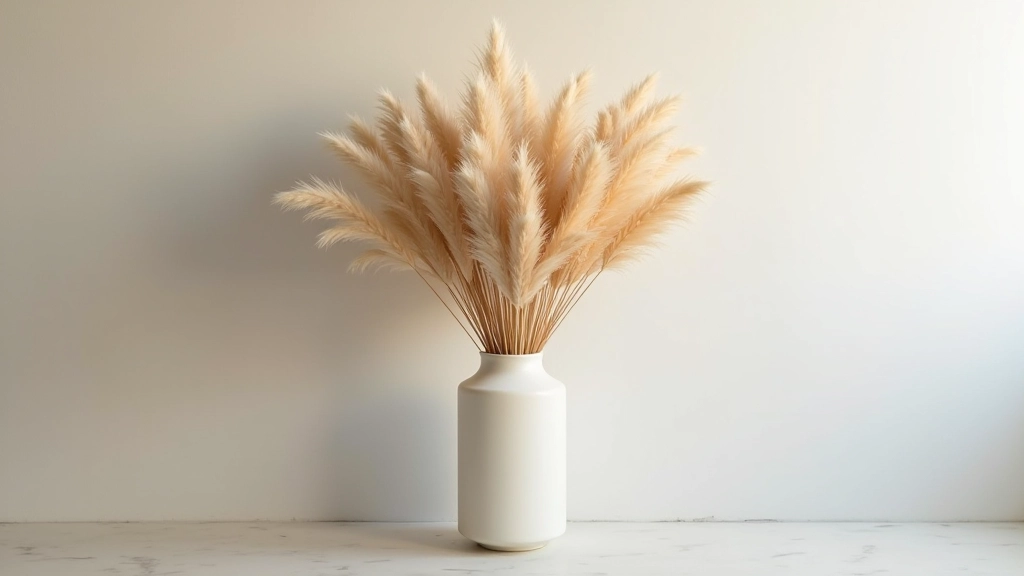
Where you put your arrangement changes everything. An arrangement that feels balanced on a shelf might look lost on the floor. Lighting affects how the reeds look — backlighting makes them glow, while side light shows their texture. Room color matters too. A minimal arrangement works in spaces with neutral walls. A textured one can handle busier backgrounds.
Consider sight lines. Where do people's eyes naturally go when they enter the room? That's where a statement piece shines. Minimal arrangements work better in secondary spaces — bedside tables, bathroom corners, shelves that aren't the main focal point. And don't put arrangements in direct drafts. Reeds are delicate. A strong AC vent or open window will make them shed prematurely.
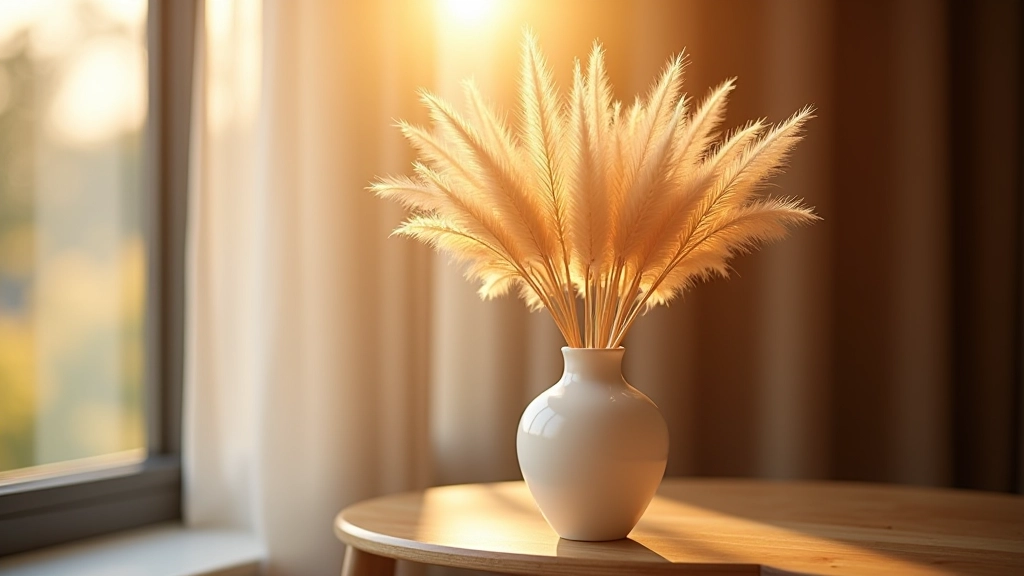
A few specifics that'll improve your results immediately. First, use fresh or recently dried reeds — they're more flexible and easier to position. Older dried material gets brittle. Second, fill your vase with sand or pebbles, not water. This gives the stems something to anchor into and keeps everything stable. Water will make the stems absorb moisture and deteriorate faster.
Third, group stems in clusters of 3-5. Rather than placing them one at a time, bundle a few together and position them as a unit. This creates tighter visual groups and looks more intentional. Finally, rotate your arrangement every week or two. This prevents stems from permanently bending in one direction and helps them wear evenly. You'll extend the life of your display by a month or more with this simple habit.
Pro move: Keep extra reeds on hand. As individual stems fade or break, you can swap them out. This keeps your arrangement looking fresh without starting from scratch.
You don't need much. One ceramic vase, a bundle of dried pampas reeds, and 20 minutes. Start with the style that matches your space and personality. The minimal approach if you like clean lines. The textured one if you want visual interest. The statement piece if you're ready to make a bold move. You'll know which one resonates.
It's okay if your first attempt isn't perfect. Arrangements aren't fragile in the way you'd think. You can adjust, remove stems, add more, shift things around. That experimentation is actually how you'll develop your eye for what works in your specific space. And honestly? That's the real skill. Not following a formula, but understanding how these materials interact with light, space, and the things around them.
This guide shares practical approaches to arranging ceramic vases with dried reeds based on common design principles and experience. Individual results depend on your specific vase shape, reed quality, room dimensions, and lighting. Dried reeds are natural materials — their appearance and durability will vary. This information is meant to inspire experimentation, not prescribe exact results. Every space is different, and part of the fun is discovering what works best in yours.
Explore the traditional hand-throwing techniques used by kormcroft ceramicists. Learn what makes handmade vases unique.
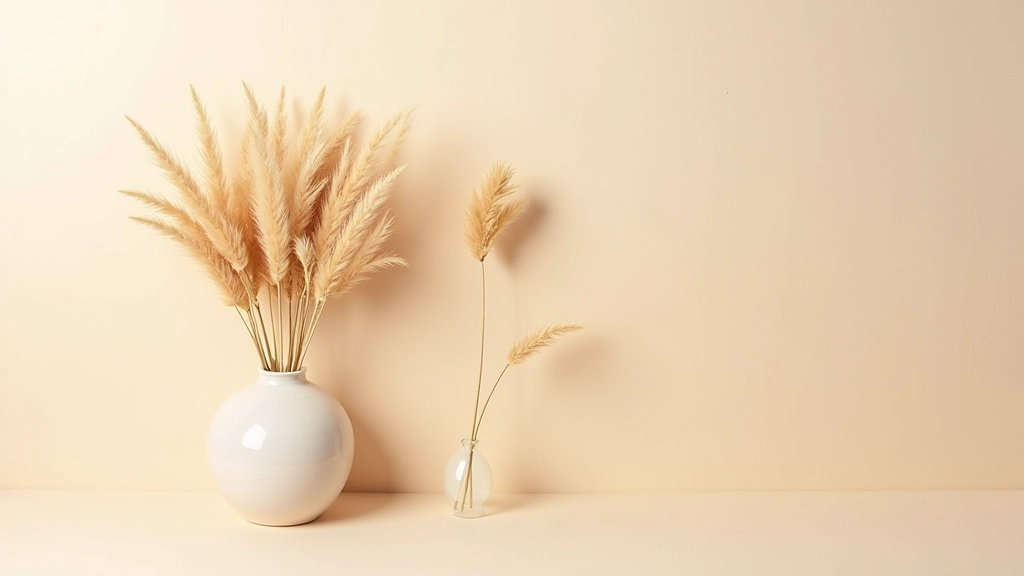
Not all dried reeds are the same. We break down pampas varieties, stem thickness, and how to choose quality materials.
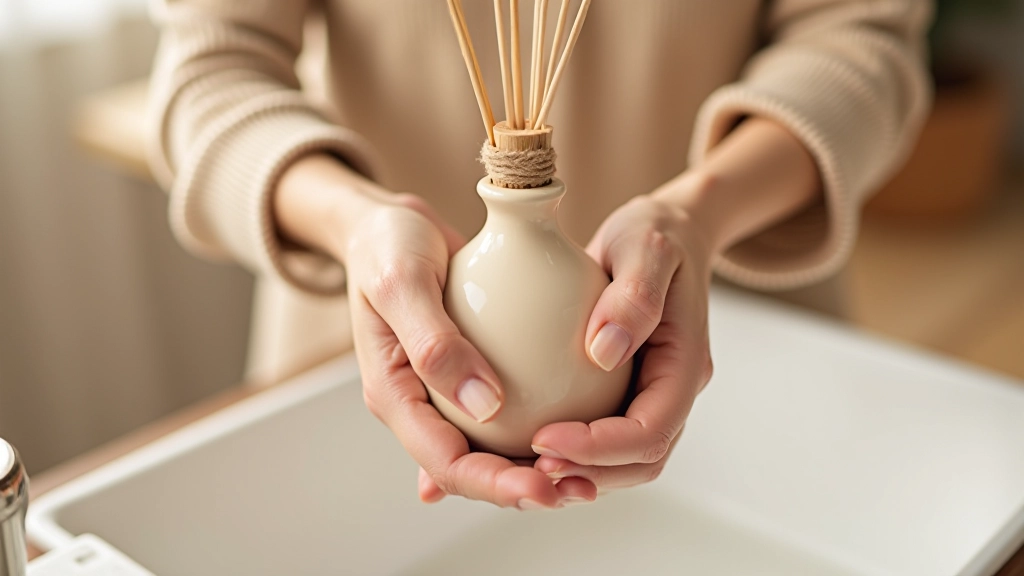
Keep your ceramic vases looking beautiful for years. Simple care routines that protect glazes and extend life.